 Skip to the content
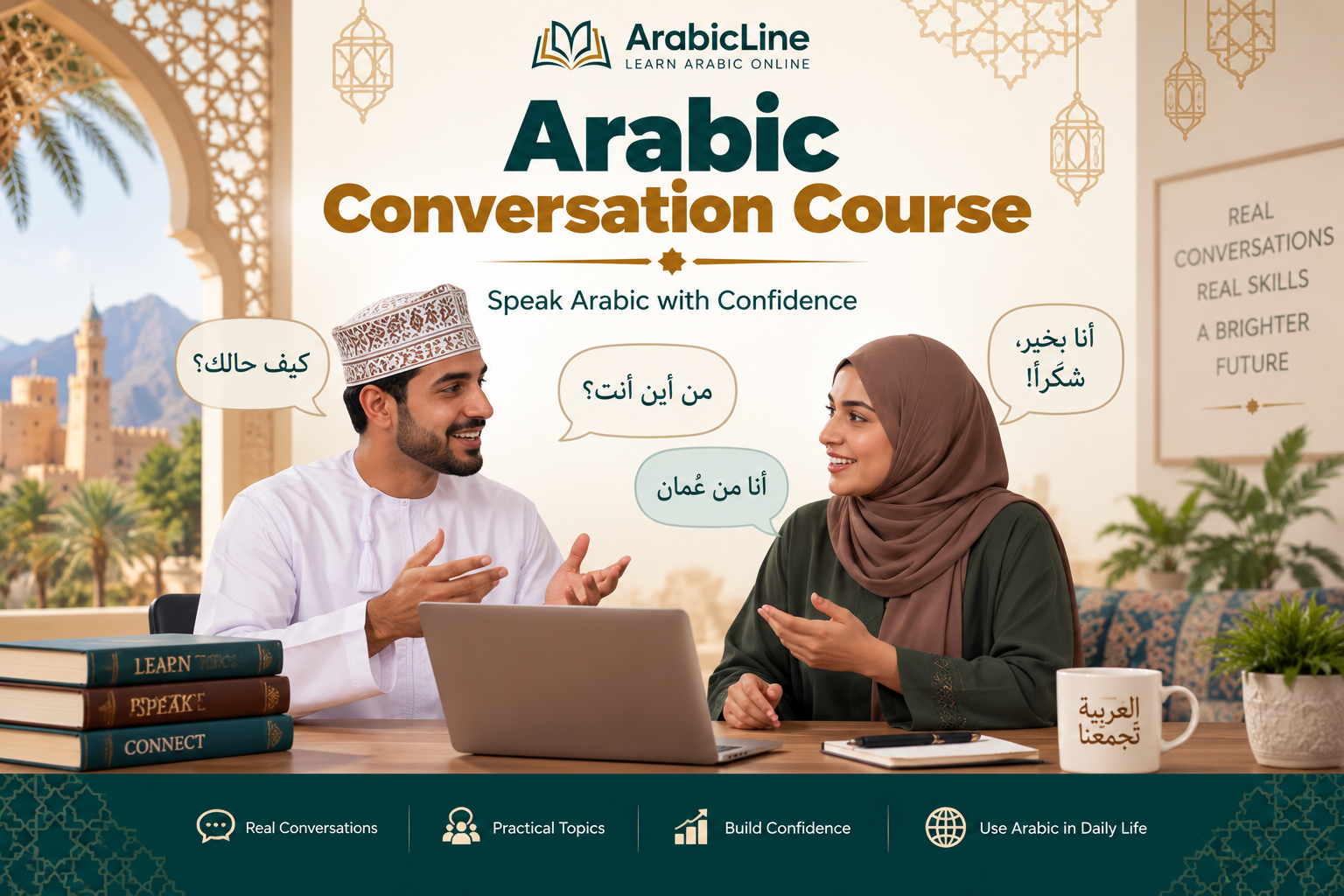
Online Arabic Conversation Course
Speak Arabic with Confidence
Our Arabic Conversation Course is designed for non-native Arabic speakers who want to improve their speaking and listening skills and communicate more confidently in Arabic.
Through practical conversations, useful expressions, and real-life situations, you will learn how to use Arabic naturally in everyday communication.
Whether you are a beginner who wants to start speaking Arabic or an intermediate learner who wants to become more fluent, this course provides practical opportunities to listen, speak, practice, and communicate.
If you are completely new to Arabic, we recommend starting with our Arabic for Beginners course to build a foundation in basic vocabulary, pronunciation, and communication.
Why Learn Arabic Conversation?
Learning Arabic is not only about memorizing vocabulary and grammar rules. You also need to practice using the language in real communication.
An Arabic conversation course can help you develop the confidence to speak, understand common expressions, respond to questions, and participate in everyday conversations.
By practicing regularly, you can improve your:
- Arabic speaking skills
- Arabic listening skills
- Pronunciation
- Vocabulary
- Fluency
- Communication skills
- Confidence when speaking Arabic
Our course focuses on practical communication so that you can use the Arabic you learn in meaningful situations.
What Will You Learn?
Throughout this Arabic Conversation Course, you will learn how to:
- Introduce yourself in Arabic.
- Greet people and respond appropriately.
- Ask and answer common questions.
- Talk about yourself and your interests.
- Talk about family and friends.
- Discuss daily activities and routines.
- Talk about work and education.
- Talk about hobbies and free-time activities.
- Ask for and give information.
- Communicate while shopping.
- Order food and drinks.
- Communicate in restaurants.
- Ask for directions.
- Talk about travel and transportation.
- Make appointments.
- Express your needs and preferences.
- Express opinions and feelings.
- Participate in everyday conversations.
- Understand common Arabic expressions.
- Improve your pronunciation and listening comprehension.
Arabic Conversation Course Curriculum
The course is organized around practical topics and situations that learners are likely to encounter in everyday life.
Module 1 – Greetings and Introductions
Learn how to:
- Say hello and goodbye.
- Introduce yourself.
- Ask someone’s name.
- Ask where someone is from.
- Talk about basic personal information.
- Start a simple conversation.
Module 2 – Personal Information
Practice talking about:
- Your name
- Age
- Nationality
- Country
- Languages
- Family
- Interests
- Personal background
Module 3 – Family and Friends
Learn useful expressions for talking about:
- Family members
- Friends
- Relationships
- Daily activities
- Personal experiences
Module 4 – Daily Life and Routines
Practice conversations about:
- Morning routines
- Work
- Study
- Meals
- Shopping
- Free time
- Evening activities
Module 5 – Shopping and Everyday Services
Learn how to communicate in situations such as:
- Buying products
- Asking about prices
- Asking for sizes and colors
- Making requests
- Paying for items
- Asking for help
Module 6 – Food and Restaurants
Practice useful Arabic conversations for:
- Ordering food
- Asking about meals
- Ordering drinks
- Asking for the bill
- Making requests
- Talking about food preferences
Module 7 – Travel and Transportation
Learn how to:
- Ask for directions.
- Ask about transportation.
- Talk about destinations.
- Buy tickets.
- Ask about schedules.
- Communicate at airports and transportation stations.
Module 8 – Work and Education
Practice conversations related to:
- Jobs
- Workplaces
- Studies
- Classes
- Colleagues
- Teachers
- Professional communication
Module 9 – Social Conversations
Develop your ability to:
- Talk about hobbies.
- Discuss interests.
- Talk about the weather.
- Make plans.
- Invite someone.
- Accept or decline an invitation.
- Talk about experiences.
Module 10 – Expressing Opinions and Feelings
Learn how to:
- Express opinions.
- Agree and disagree.
- Express likes and dislikes.
- Talk about feelings.
- Give simple explanations.
- Participate in longer conversations.
Learn Arabic Through Real Conversations
The best way to improve your speaking ability is to practice using Arabic in realistic situations.
Throughout the course, you will work with:
- Practical dialogues
- Everyday expressions
- Question-and-answer activities
- Listening practice
- Speaking exercises
- Pronunciation practice
- Vocabulary activities
- Role-play situations
- Conversation exercises
- Review activities
The goal is to help you move from understanding Arabic to actually using Arabic in conversation.
Arabic Speaking and Listening Practice
Speaking and listening are closely connected.
To communicate effectively, you need to understand what other people are saying and respond appropriately.
Our Arabic Conversation Course gives you opportunities to practice both skills together.
You will learn to:
Listen → Understand → Respond → Speak
Regular practice can help you become more comfortable with Arabic pronunciation, common expressions, and natural conversation patterns.
Arabic Conversation for Beginners
You do not need to be fluent in Arabic before starting this course.
The lessons are designed to help learners gradually build their communication skills.
Beginners can start with simple conversations such as greetings, introductions, personal information, family, and daily activities.
If you are starting Arabic from zero, you can first explore our Arabic for Beginners course and then use the Conversation Course to develop your speaking and listening skills.
Arabic Conversation and Modern Standard Arabic
Arabic learners often need both a strong language foundation and practical communication skills.
Our Modern Standard Arabic Course provides broader training in Modern Standard Arabic (MSA), including:
- Reading
- Writing
- Listening
- Speaking
- Grammar
- Vocabulary
- Communication
The Arabic Conversation Course focuses more specifically on speaking, listening, practical expressions, and real-life communication.
If your goal is to develop a complete foundation in formal Arabic, start with our Modern Standard Arabic Course.
If your main goal is to become more comfortable speaking Arabic, this Arabic Conversation Course is designed for you.
Improve Your Arabic Grammar Through Conversation
Good communication requires more than memorizing grammar rules. At the same time, grammar helps you form accurate sentences and express your ideas clearly.
Our Arabic Grammar Course focuses specifically on Arabic grammar and sentence structure.
You can combine both courses to develop:
Grammar accuracy + Speaking confidence
Learn the grammatical structures through our Grammar Course, then practice using Arabic through real conversations.
Who Is This Arabic Conversation Course For?
This course is suitable for:
Arabic Beginners
Learners who want to start speaking Arabic through simple and practical conversations.
Intermediate Arabic Learners
Students who already know basic Arabic but want more speaking and listening practice.
Non-Native Arabic Speakers
Learners who want to communicate more naturally and confidently in Arabic.
Travelers
People who want to communicate in common situations while visiting Arabic-speaking countries.
Students
Learners who want to improve their Arabic communication skills for study and everyday life.
Professionals
People who need Arabic for workplace communication, meetings, social interaction, or professional situations.
Why Choose Our Arabic Conversation Course?
Practical Conversations
Learn Arabic through realistic conversations rather than memorizing isolated words.
Useful Everyday Expressions
Build a vocabulary of phrases and expressions that you can use in real situations.
Speaking Practice
Get regular opportunities to practice speaking and expressing yourself in Arabic.
Listening Practice
Improve your ability to understand spoken Arabic and respond appropriately.
Real-Life Situations
Practice conversations related to family, work, travel, shopping, restaurants, education, and social life.
Designed for Non-Native Speakers
The course is structured specifically for learners who are studying Arabic as a second or foreign language.
Course Information
Course: Arabic Conversation
Format: Online
Level: Beginner to Intermediate
Language of Instruction: English
Target Students: Non-Native Arabic Speakers
Focus: Speaking, Listening & Communication
Practice: Dialogues, Conversations, Listening & Speaking Activities
Combine Our Arabic Courses
Learning Arabic becomes more effective when different language skills support each other.
Modern Standard Arabic Course
Build a broad foundation in Modern Standard Arabic, including reading, writing, listening, speaking, vocabulary, and grammar.
Arabic Grammar Course
Develop a deeper understanding of Arabic grammar, sentence structure, verbs, nouns, pronouns, and grammatical rules.
Arabic Conversation Course
Practice speaking and listening through practical conversations and real-life situations.
Arabic Beginners Course
Start learning Arabic from the basics and develop essential vocabulary, pronunciation, and communication skills.
You can combine these courses according to your level and learning goals.
Frequently Asked Questions
Is this Arabic Conversation Course suitable for beginners?
Yes. The course includes simple conversations and gradually introduces more advanced topics. Beginners can start with basic greetings, introductions, questions, and everyday expressions.
Do I need previous knowledge of Arabic?
No advanced knowledge is required. However, learners with some basic Arabic knowledge may progress more quickly.
Complete beginners can also start with our Arabic for Beginners course.
Is the course taught in English?
Yes. The course is designed for non-native Arabic speakers, and English can be used to explain vocabulary, expressions, and language concepts clearly.
Will I learn to speak Arabic?
Yes. Speaking practice is one of the main focuses of the course. You will practice useful expressions, questions, answers, dialogues, and real-life conversations.
Will I improve my Arabic listening skills?
Yes. Listening practice is an important part of developing conversational ability. You will practice understanding commonly used words, expressions, questions, and responses.
What topics are covered in the Arabic Conversation Course?
The course covers practical topics such as introductions, family, daily routines, shopping, restaurants, travel, transportation, work, education, hobbies, social conversations, opinions, and feelings.
Is this course useful for travelers?
Yes. The course includes practical situations that travelers may encounter, such as asking for directions, transportation, shopping, restaurants, and everyday communication.
Can I take the Arabic Grammar Course and Conversation Course together?
Yes. The two courses complement each other. The Arabic Grammar Course helps you understand how Arabic sentences are formed, while the Conversation Course helps you use Arabic in practical communication.
What is the difference between Arabic Conversation and Modern Standard Arabic?
The Modern Standard Arabic Course provides broader training in formal Arabic, including reading, writing, grammar, vocabulary, listening, and speaking.
The Arabic Conversation Course focuses more specifically on practical speaking, listening, expressions, and everyday communication.
How can I improve my Arabic speaking confidence?
Regular practice is essential. Listening to Arabic, repeating useful expressions, practicing dialogues, and communicating regularly can help you become more comfortable speaking Arabic.
Start Speaking Arabic Today
Learning Arabic becomes much more meaningful when you can use it to communicate with other people.
Develop your speaking and listening skills, practice useful expressions, and build the confidence you need to communicate in Arabic.
Listen. Speak. Practice. Communicate.