Skip to the content

Omani Arabic vs Modern Standard Arabic: Which Should Expats Learn?
If you live in Oman and want to learn Arabic, one of the first questions you will face is: should I learn the Omani dialect or Modern Standard Arabic? The short answer is that you need a bit of both, and the order matters. This guide explains the difference and suggests a practical path for expats.

In this guide
What Is Modern Standard Arabic?
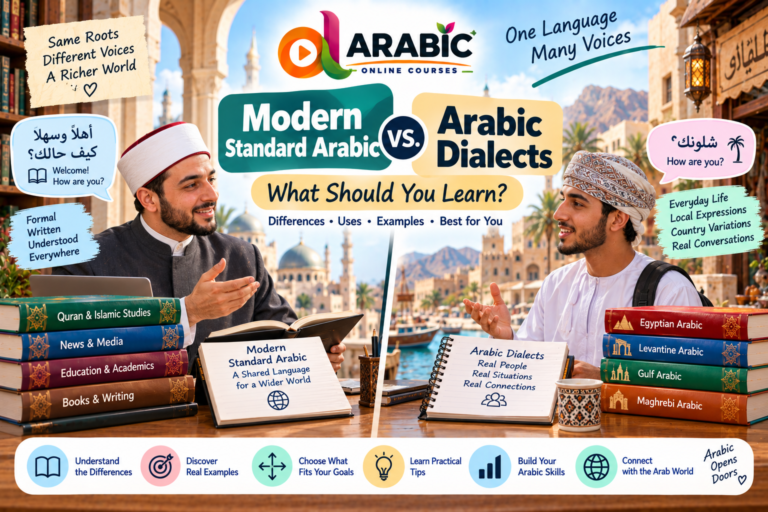
Modern Standard Arabic (MSA), called al-fuṣḥā (الفصحى), is the shared, formal Arabic of the Arab world. It is used in:
- newspapers, books and websites
- TV news and official speeches
- road signs, forms and official documents
- schools and universities
Because it is the same across all Arab countries, MSA is the key to reading and to understanding formal Arabic anywhere. It also makes Omani Arabic easier to pick up later, because so much vocabulary is shared.
What Is Omani Arabic?
Omani Arabic is the spoken dialect of Oman and part of the wider family of Gulf Arabic. It is the language of everyday life: at home, with friends, in shops and at work. Like every dialect, it varies by region, and Muscat speech sounds different from that of the interior or Dhofar.
Omani Arabic shares a large part of its vocabulary with MSA. Many everyday words are identical or very close, which is good news for learners.
Key Differences Between Omani Arabic and MSA
| Feature | Modern Standard Arabic | Omani / Gulf Arabic |
|---|---|---|
| Main use | Reading, writing, media, formal speech | Everyday conversation |
| Letter ج | Usually “j” | Often a hard “g” |
| Where? | أين؟ ayna? | وين؟ wayn? |
| Good / OK | جيد jayyid | زين zayn |
| How are you? (to a woman) | كيف حالكِ؟ kayfa ḥāluki? | kayf ḥālish? |
| Word endings | Full grammatical endings in careful speech | Simplified endings in speech |
Despite these differences, an Omani will understand you if you speak simple MSA, and much of what you learn in MSA (letters, core vocabulary, numbers, sentence patterns) carries straight over into the dialect.
Which Should You Learn First?
It depends on your goals and how much Omani Arabic you need from day to day. Use this simple guide:
| Your main goal | Recommended focus |
|---|---|
| Read signs, forms, menus and documents | Start with MSA foundations (alphabet and reading) |
| Chat with neighbours and colleagues | Core shared Arabic, then add Gulf/Omani everyday expressions |
| Work in an Arabic-speaking office | Both: MSA for reading and emails, dialect for conversation |
| Understand news and media | MSA |
| Travel around the Arab world | MSA plus a little dialect |
For most expats in Muscat, the most efficient path is: This order gives you a solid base first, then adds Omani Arabic for everyday conversations.
- 1. Learn the Arabic alphabet and pronunciation. This unlocks reading everywhere. Start with the Arabic alphabet and Arabic pronunciation.
- 2. Build core everyday language that works in both MSA and the dialect: greetings, introductions, numbers, prices, places and time.
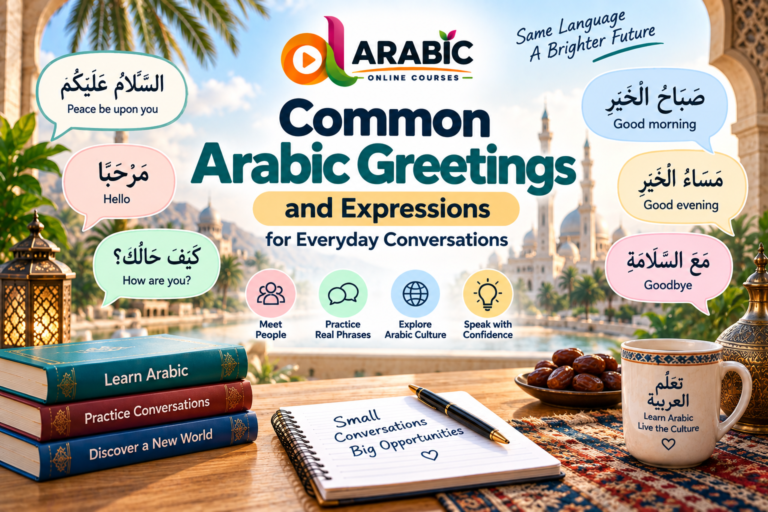
- 3. Add local expressions you hear around you in Oman, such as zayn, wayn and yalla. See Useful Arabic Phrases for Expats in Oman.
- 4. Keep going with more grammar and vocabulary as your confidence grows (Arabic grammar for beginners).
Common Myths About Arabic Dialects
- “If I learn MSA, nobody will understand me.” Not true. Educated speakers everywhere understand MSA, and simple MSA sounds polite, not strange.
- “The dialect has no rules.” Every dialect has a clear grammar. It is simply used mostly in speech rather than writing.
- “I should wait until I can learn the dialect properly.” Start now with the shared foundations; they are useful from the first day.
For a wider comparison of Arabic varieties, read Modern Standard Arabic vs Arabic Dialects, or learn about our Arabic dialects course and Modern Standard Arabic course. Many of these myths come up when expats first hear Omani Arabic in Muscat.
Start with Practical Arabic for Life in Oman
Our live online Arabic for Beginners course for adults in Oman follows exactly this path: you learn the letters and sounds, then practical everyday Arabic you can use immediately, with explanations in English and speaking practice in every lesson. The first class is free. If you would like private lessons or are not a complete beginner, book a free evaluation and we will find the right level for you. You start with the shared foundations and add useful Omani Arabic expressions as you go.
Frequently Asked Questions
Is Omani Arabic very different from Gulf Arabic?
Omani Arabic belongs to the Gulf family and shares a lot with dialects in the UAE and other Gulf countries, but it has its own accent and some local vocabulary.
Can I write in Omani Arabic?
Dialects are mostly spoken. People write in MSA for anything formal, though casual messages on WhatsApp often mix in dialect words.
Will learning MSA help me understand Omanis?
Yes. A large share of everyday vocabulary is shared, and MSA gives you the reading skills and structure that make picking up the dialect much faster.